What We Do

Services

Every job below gets the same base prep and jointing, whether it's a full driveway or a single repair.

HomeServices

Everything we take on

Every job below is one we do ourselves across San Angelo.

Concrete Driveways

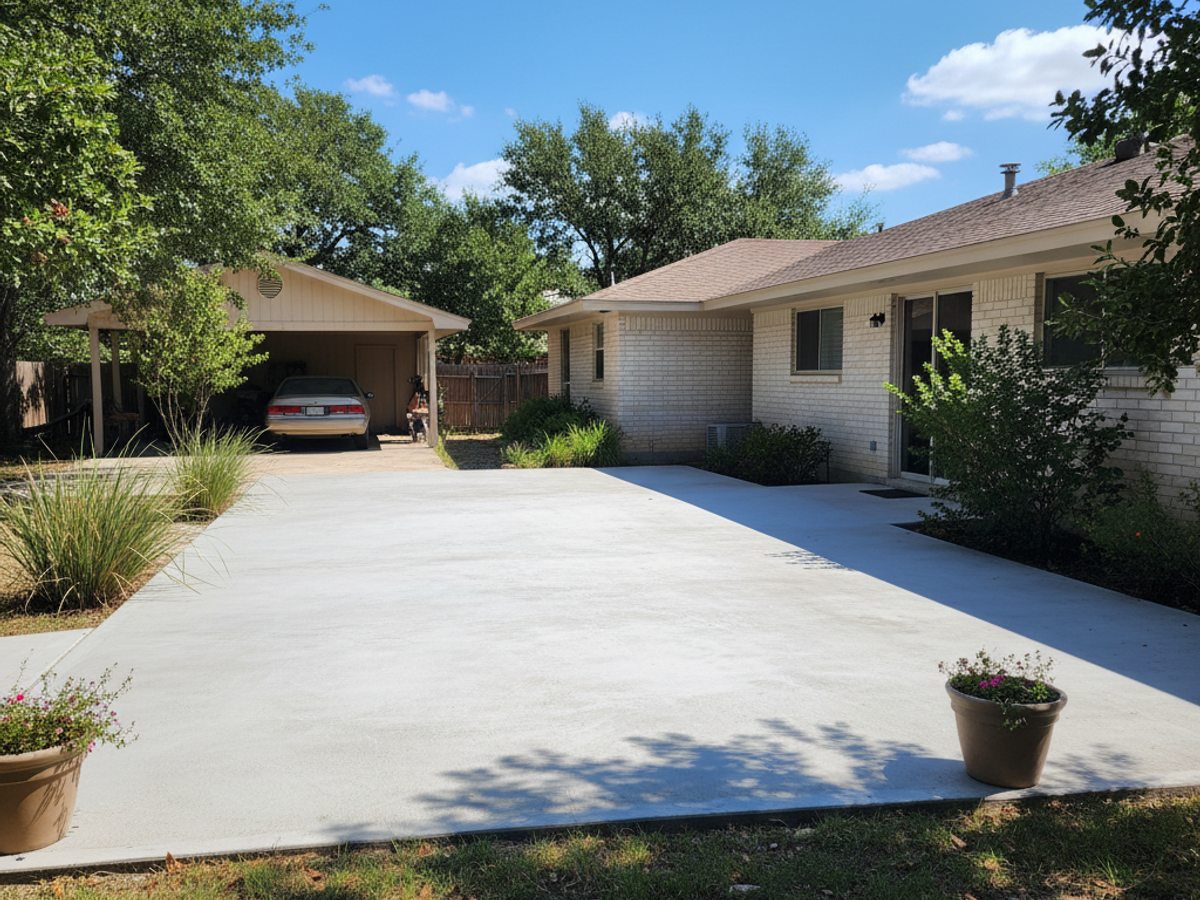
We form and pour driveways with rebar for vehicle weight, not wire mesh. We control the slope so water runs off toward the street instead of pooling at your garage door.

Concrete Patios

A patio slab gets a broom finish or a stamped pattern depending on what you're after. We slope it away from the house about a quarter inch per foot so water doesn't run toward your foundation.

Stamped Concrete

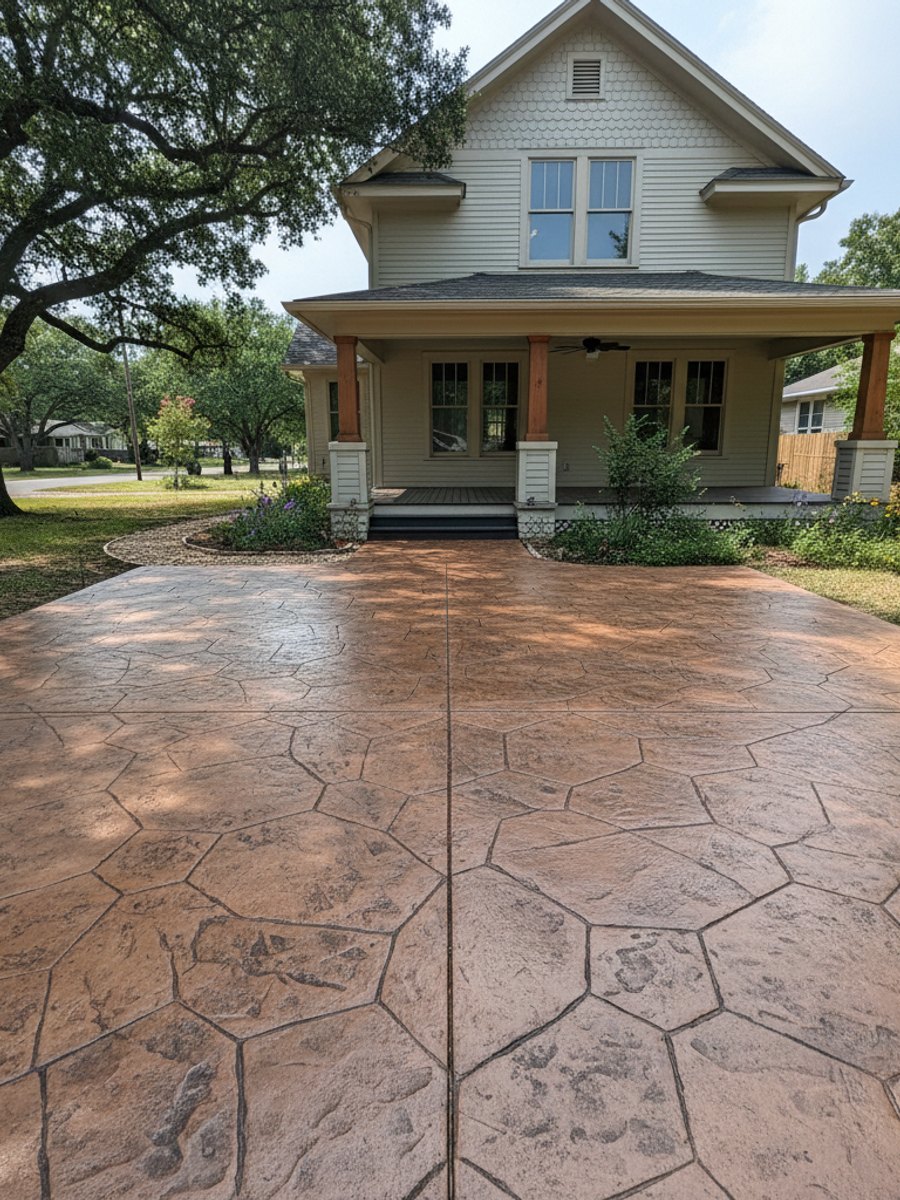
We stamp patios, walkways and pool decks in patterns like ashlar slate or running bond, then color and seal them. Stamped concrete costs more than plain flatwork, but it holds up the same way if the base and joints are done right.

Concrete Slab Foundations

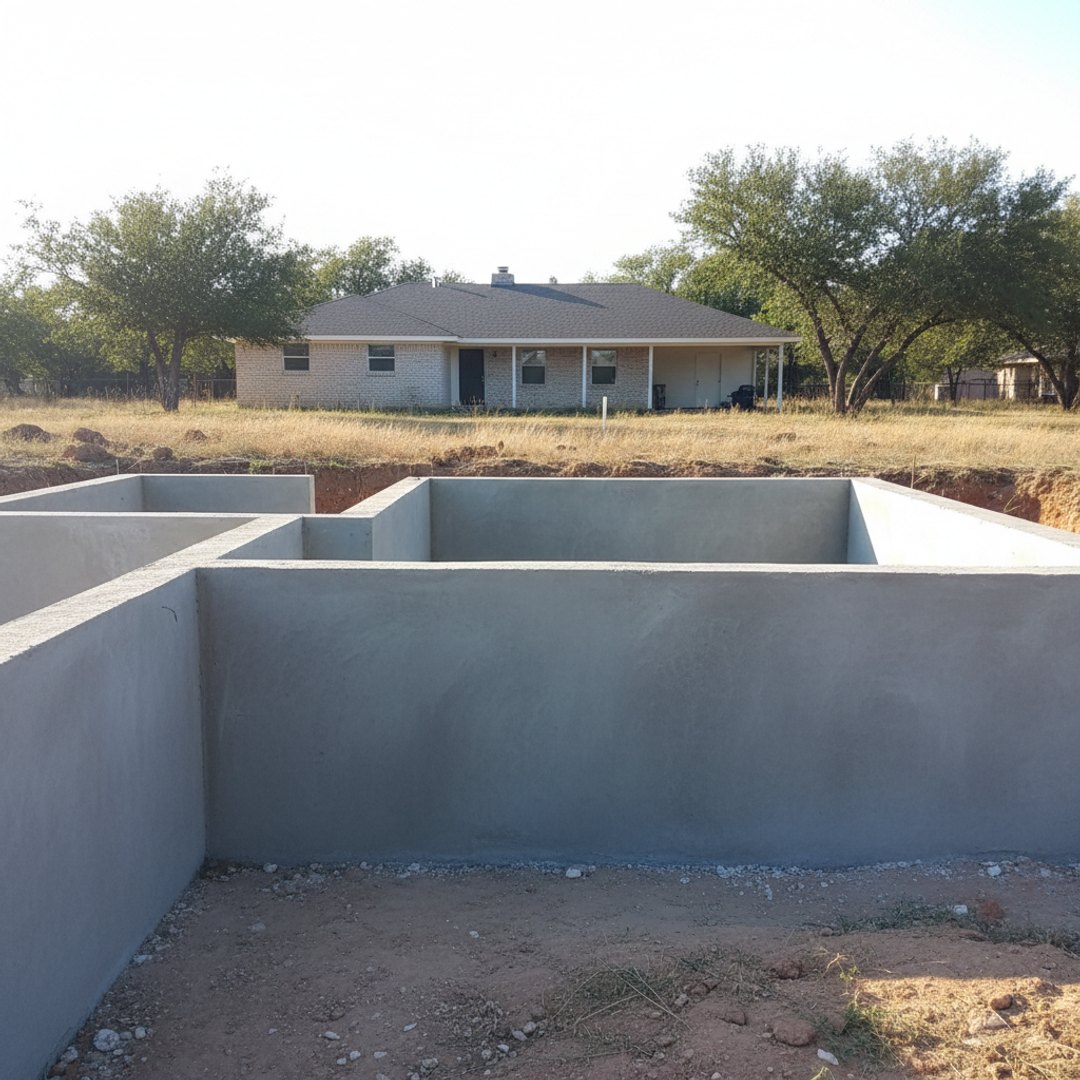
We pour slab foundations for shops, additions and small structures, with rebar placed to spec and a vapor barrier under it when the plans call for one. Getting the grade and forms square matters more here than on any other pour, since everything built on top depends on it.

Concrete Sidewalks & Walkways

Sidewalks take a lot of foot traffic and ground movement even out here, so we joint them every four to six feet. That keeps a hairline crack from turning into a trip hazard.

Concrete Repair

Cracked, sunken or spalling concrete doesn't always need to be torn out. We can mudjack a sunken section back level, patch spalling with a bonded topping, or cut out and replace a bad panel and match the joint pattern.

Concrete Steps & Porches

Steps get built with proper rise and run so they meet code and don't feel off underfoot. We reinforce them the same way we would a slab, since a step poured thin will crack at the nose first.

Garage & Shop Slabs

Shop slabs have to carry more than a car, so we thicken the edges and add rebar where equipment or a lift will sit. We can also saw-cut in a drain if you want the floor to actually shed water instead of holding a puddle.

Concrete Removal & Demolition

Before we pour new concrete we break out and haul off the old slab, including any rebar or mesh tangled up in it. We'll also remove a slab on its own if you're just trying to clear a spot for something else.

Decorative Concrete & Exposed Aggregate

Exposed aggregate finishes wash the top layer of paste off after the pour so the rock underneath shows through, which gives you a non-slip surface for pool decks and walkways. We can also mix in color and stamped combinations, though that adds time to the schedule.

How It Works

Four steps, and no surprises in any of them.

01

We come and look

You tell us what you want doing, we look at what is actually there, and we ask the awkward questions early.

02

You get a price

In writing, itemised, free. If something might add cost later we flag it now rather than at the end.

03

We do the work

Same crew throughout. We cover your floors, keep the dust down and tidy up before we leave each day.

04

We walk it with you

You point out anything you are not happy with and we fix it before the invoice, not after.

Where We Work

All of this, across San Angelo, TX

Service area for driveway pours, patio work, slab repair and everything else on this page.

San Angelo, TX
Grape Creek, TX
Ballinger, TX
Winters, TX
Robert Lee, TX
Bronte, TX
Eldorado, TX
Mertzon, TX
Miles, TX
Christoval, TX
Wall, TX
Common Questions

Things worth asking

The questions that come up once a concrete project is actually underway.

Do I need a permit for a new driveway or patio?
Permit requirements for concrete work vary by city and county, and some jurisdictions require a permit for a new driveway approach where it meets the street but not for a standalone patio. Checking with the local building department before pouring avoids redoing work that doesn't meet setback or drainage rules.
How long does a typical concrete job take?
A standard driveway or patio usually takes one to two days to form and pour, plus 24 to 48 hours before it can be walked on and about a week before it can handle vehicle weight. Full cure takes closer to 28 days, which is when the concrete reaches its full strength.
Can you work within a set budget?
Concrete jobs can be scoped to a budget by adjusting square footage, finish type or reinforcement, and a contractor should lay out those tradeoffs during the estimate rather than after the pour. Choosing a broom finish over stamped concrete, or wire mesh over rebar on a walkway, are common ways to bring cost down.
Do you guarantee your concrete work?
Most concrete contractors warranty against defects in workmanship, such as improper finishing or forms that were out of level, for a set period after completion. Cracking from ground movement is usually handled separately, since concrete is expected to develop some hairline cracking as it cures.
Who will I be dealing with during the project?
On most concrete jobs, the person who gave the estimate is the same person running the crew on site, especially with smaller contractors. That means questions about the pour, the finish or a mid-job change can be answered directly instead of relayed through an office.
What kind of concrete mix and materials do you use?
Residential concrete work typically uses a 3,000 to 4,000 PSI mix, with rebar reinforcement recommended for driveways and slabs that carry vehicle weight and wire mesh sometimes used on lighter-duty walkways. The right mix and reinforcement depend on what the slab has to support and the local soil conditions.
Can I still live at home during a concrete project?
Homeowners can stay in the house during driveway, patio or sidewalk pours without disruption to daily living, since the work happens outside and the main inconvenience is keeping vehicles and foot traffic off the fresh concrete. Access to a garage may be limited for a few days until the driveway cures enough to drive on.
How should I prepare the site before the crew arrives?
Clearing the area of vehicles, furniture, plants and sprinkler heads before a concrete crew arrives speeds up the job and avoids damage to anything left in the work zone. Marking any buried utility lines or septic components ahead of time also helps the crew avoid them during excavation.
What happens if you find a problem once the ground is opened up?
Unexpected issues like buried debris, an old broken-out slab, unstable fill dirt or a shallow utility line sometimes turn up once excavation starts on a concrete project. A contractor should stop and discuss added cost or a revised plan with the homeowner before continuing, rather than adding it to the final bill unexplained.
How do I take care of new concrete after it's poured?
New concrete should be kept off vehicle traffic for about a week and free of deicing salts for at least the first winter, since salt speeds up surface scaling on young concrete. Sealing a driveway or patio every two to three years helps it resist stains and the freeze-thaw cycle.

Not sure what you need?

Describe the problem and we will tell you what it probably is. No obligation.
Call (325) 246-3886