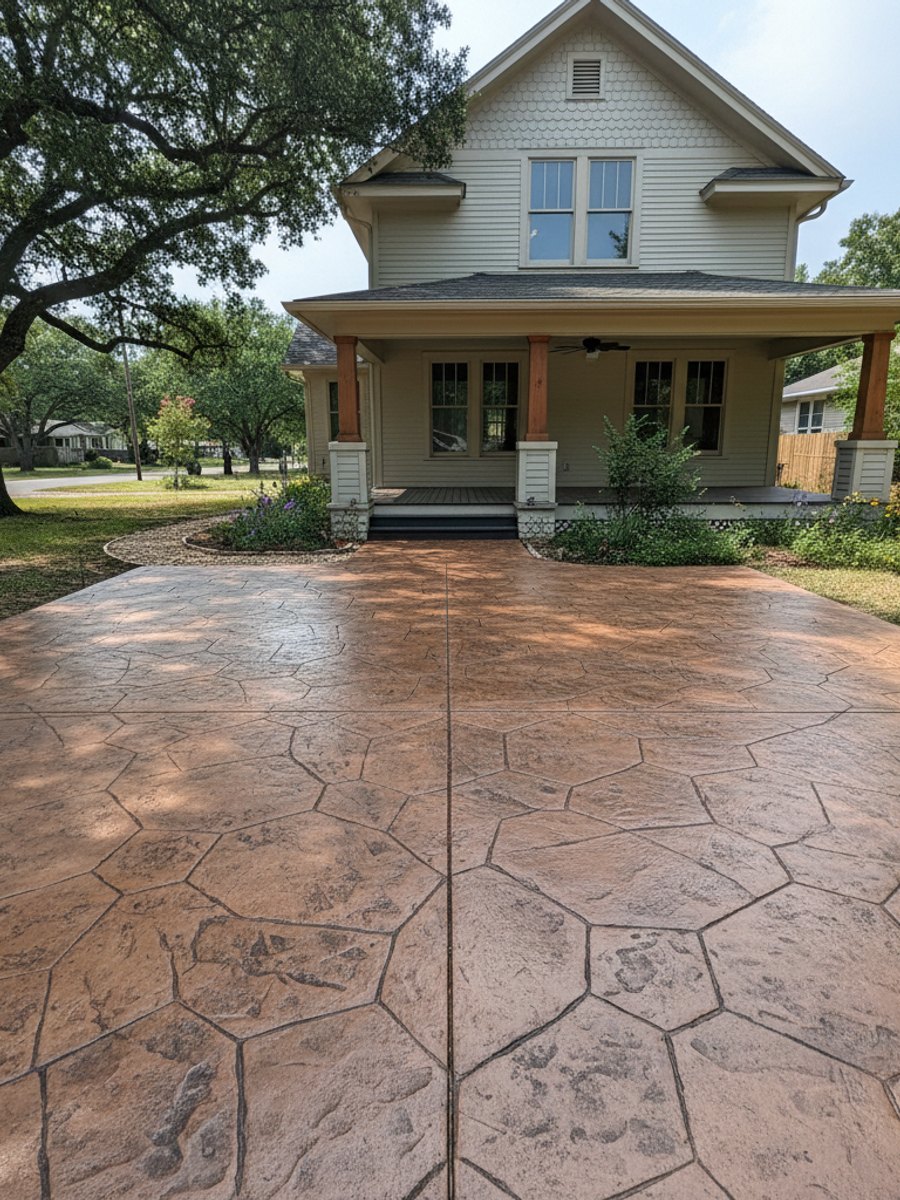
Concrete doesn't come back off the truck. Once it's poured and set up, whatever went into it, the base, the reinforcement, the mix, is locked in for good. If a driveway cracks wrong two years from now, you're not calling to have a mistake corrected cheaply. You're paying to tear it out and start over. That's the reason hiring the right person for this job matters more than most home projects, and it's why it's worth asking a few pointed questions before anyone shows up with a mixer truck.
Ask what they know about the dirt under your yard
San Angelo sits on a mix of clay and caliche, with some sandier, siltier ground closer to the Concho River and its old floodplain. Clay soil swells when it's wet and shrinks hard when it dries out, and that movement is what pushes slabs, walkways, and porch steps out of level over time if the base under them wasn't built to handle it. Caliche is the opposite problem. It's dense, chalky, and hard to dig through, but once it's compacted right it doesn't move much. A contractor who's worked here a while should be able to tell you, without much thought, whether your lot leans clay or caliche and what that means for how deep they'll dig and how much compacted base rock they'll put down before any concrete goes in. If they don't ask about your soil at all, or don't have an answer when you ask them, that's worth noticing.
Base depth is not optional
For a driveway or garage slab, 4 to 6 inches of compacted base is standard before the concrete itself goes down, more if the native soil is soft or has a lot of clay in it. Skipping or shorting that base is one of the most common ways a slab ends up with settlement cracks in year two or three. It's also invisible once the job is done, which is exactly why it matters who you hire and not just what the finished surface looks like on day one.
Understand what licensing actually covers here
Texas doesn't run a statewide license for general concrete contractors the way it does for electricians or plumbers, so "licensed" isn't a single box you check the same way everywhere. What you can and should verify is general liability insurance, and workers' comp coverage if they're running a crew. Ask to see a certificate. Any contractor doing this work regularly has one ready to hand over, and a fresh certificate takes their insurer a few minutes to send. For driveway approaches, sidewalks in the right-of-way, and new slab foundations, the City of San Angelo (or Tom Green County, if you're outside city limits) is where permits get pulled, and inspections happen at specific points, usually before the pour, to check base prep and reinforcement, and sometimes after. A contractor who's done this before knows the process without being told and handles the paperwork as part of the job. One who shrugs at the mention of a permit, or tells you it's not needed when it is, is telling you something about how the rest of the job will go too.
Read the bid like it's a spec sheet, not a price
Two bids that look close on price can be nowhere close on what you're actually getting. A bid worth trusting should spell out the slab thickness (4 inches for patios and walkways, typically 5 to 6 for a driveway that'll see vehicle weight), the concrete strength in PSI (3,000 PSI is common for flatwork here, 3,500 to 4,000 for driveways and anything load-bearing), and whether reinforcement is rebar or wire mesh. Rebar tied on chairs, so it sits in the middle of the slab instead of the bottom, holds up better long-term than mesh that gets stepped down into the base during the pour, which happens more often than it should. The bid should also say how the control joints are laid out. Those are the intentional cuts, spaced roughly every 8 to 10 feet on a driveway, that give the slab a place to crack that isn't across the middle of your car pad. If joints aren't mentioned, ask.
Weather here is going to test the work either way
Summers in San Angelo push past 100 degrees for weeks at a stretch, usually peaking through July and August, and that heat pulls moisture out of fresh concrete fast. A slab poured on a 102-degree day needs to be kept damp or covered with curing compound within hours, or the surface can dry too quickly and crack or dust before it ever gets to full strength. A contractor who pours through the summer here should already have a plan for that, whether it's timing the pour for early morning or wetting the surface down that first day. On the other end, this area gets a handful of hard freezes each winter, usually December through February, and concrete poured right before one of those without any protection can suffer surface damage before it's cured enough to handle the cold. Either way, plan on staying off a new driveway or slab for at least 24 to 48 hours before foot traffic, and closer to 7 days before parking a vehicle on it, longer in cooler weather since curing slows down with the temperature.
What to walk away from
- A bid dramatically lower than the others with no explanation, especially if it skips over base depth or PSI entirely.
- Anyone offering to pour tomorrow with zero mention of a permit on a job that needs one.
- No answer on control joint spacing, or a vague "we'll figure it out on site."
- Pressure to sign same-day, before you've seen a written scope.
- No insurance certificate available on request. This one alone is enough reason to keep looking.
Older street or new subdivision, the checklist doesn't change
A lot near downtown or Fort Concho with a house from the 1950s often has an original slab that's shifted over decades, old plumbing runs under it, and trees with root systems that have had 70 years to spread. Repair or replacement work there usually starts with figuring out what's actually under the existing concrete before anything gets removed. A newer lot out toward Bentwood or Southland is more likely to have an HOA with rules on driveway finish or setback from the property line, and a builder's grading plan that a contractor needs to work around rather than assume. Different starting points, but the same questions apply: what's the soil doing, what's the base going to be, what's the reinforcement, what's the plan for the joints, and who's pulling the permit.
Most of this comes down to asking a contractor to explain their work instead of just quoting a price for it. Someone who's poured driveways and slabs around this part of West Texas for any length of time should be able to walk you through their answers without hesitation. That's the conversation to have before you sign anything, and it's the same one we're glad to have with anyone looking into Majestic Concrete for a driveway, patio, or slab job in San Angelo.